


In my office, I often have the privilege of sitting with a very specific kind of person. Someone whose heart is as big as their to-do list, and who I’ve come to care for deeply. On the outside, they look competent and thoughtful. They are the reliable one, the friend people call in a crisis, and the coworker who quietly holds everything together. On the inside, this person feels as though they are constantly on. Their brain is racing at 2 a.m. about something said in a meeting. Their chest is tight, shoulders up, jaw clenched, and rest is something they plan to do when they finally catch up (which they never do).
I often hear, “I’m just an anxious, stressed person. My brain doesn’t know how to relax.” From my seat, I actually see a brilliant nervous system that adapted perfectly to a childhood environment, and then never received the memo that they are not 7 years old anymore in that same environment.

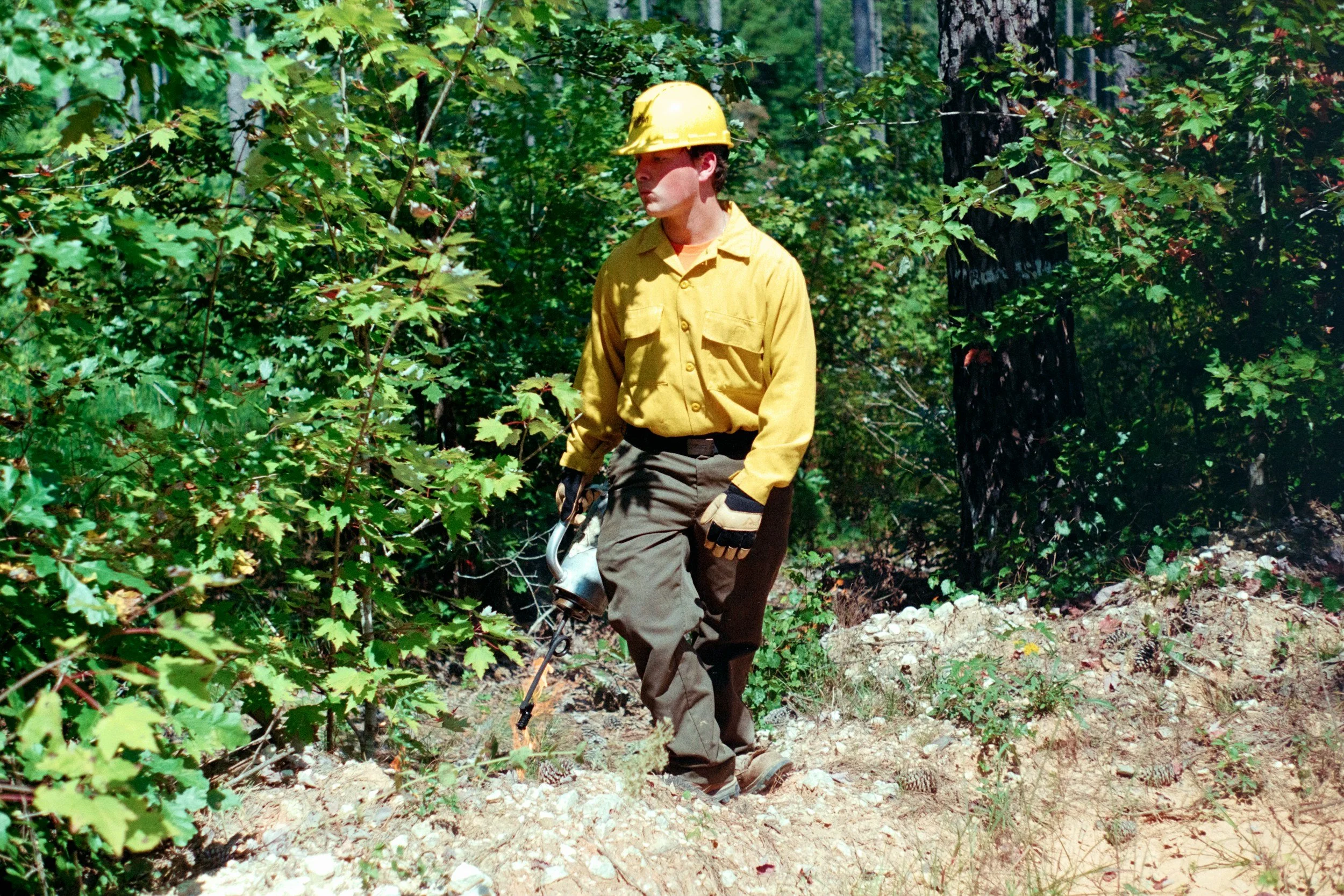
Your Nervous System: similar to an Overworked Park Ranger
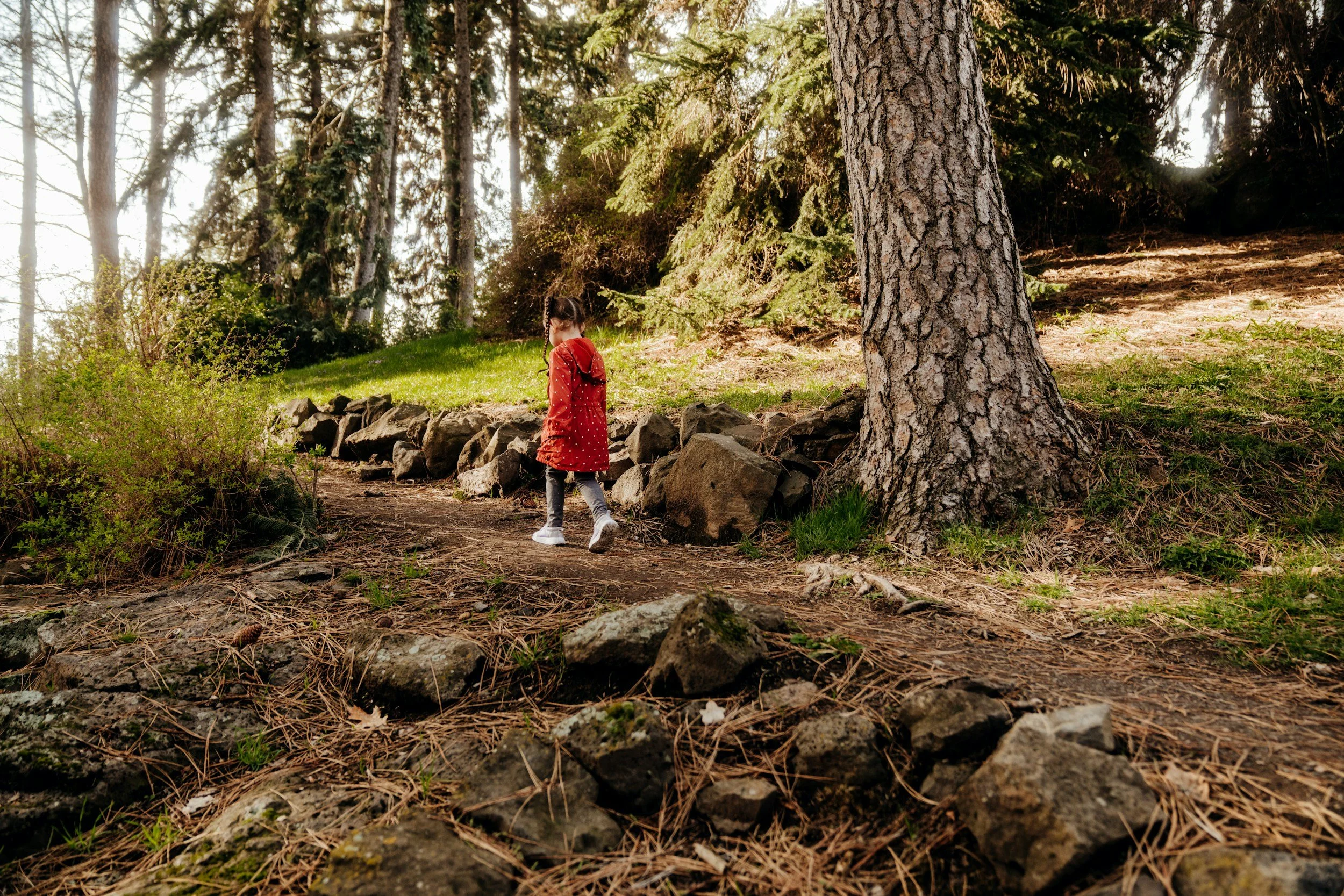
Imagine your nervous system like a park ranger. If that ranger spent its early years in a forest full of sudden storms, shouting, slammed doors, and the emotional equivalent of small wildfires, it’s going to grow up…alert. Hyper‑alert. Now imagine we move that same ranger to a calmer forest with gentle rain, birdsong, and the occasional overly enthusiastic squirrel.

If no one retrains the ranger, what happens?
They jump at every rustle. They call in backup for a squirrel encounter. They scan the horizon like a lightning strike is due any second. Your nervous system is that ranger. Here, in your early forest (your family, caregivers and environment), your nervous system learned when the storms tend to hit, who turns into a bear and when, and what you must do to stay safe, or at least less unsafe.
And here’s an important nuance: That forest doesn’t have to look dramatic from the outside to shape you this way. Yes, some childhood homes are obviously chaotic with yelling, substance use, clear neglect and explosive anger. But many of my clients grew up in homes that looked fine from the outside with parents who went to work, paid bills and showed up to events. Here, no one slammed doors or threw plates, and maybe there were even family vacations and holiday photos. And still, underneath, there was a highly anxious parent whose worry filled the air, a depressed parent who was physically present but emotionally unreachable, a quiet, chronic tension that no one named, or love that felt conditional on being easy, successful, or not adding to the burden.
Children are exquisite observers but limited interpreters. You don’t have to see overt abuse for your nervous system to learn:
“I must not be another problem”
“My big feelings are too much”
“The adult I rely on is barely holding it together; I’d better adapt.”
So whether your childhood forest was obviously chaotic or covertly strained, your inner ranger took notes and has been on high alert ever since. That over‑functioning, stressed‑out part of you, it’s not random. It’s loyal.

The 7‑Year‑Old Rules You’re Still Obeying
Let’s get specific. Picture yourself somewhere between 6-10 years old. Maybe the chaos in your house was loud and obvious with raised voices, slammed doors, unpredictable reactions, substance use, or clear conflict. Or maybe it was quiet and subtle, with a parent who was anxious, depleted, or chronically sad, one with smiles that didn’t quite reach the eyes, a sense that everyone was fine as long as no one brought too much emotion to the table. In both kinds of households, your younger self is trying to answer one core question:
“What do I have to be like to keep a connection
and stay as safe as possible here?”

You might have become:
The Overachiever - “If I’m impressive, maybe they’ll light up.”
The Helper - “If I caretake, maybe things won’t fall apart.”
The Peacekeeper - “If I don’t rock the boat, maybe the tension will stay low.”
The Invisible One - “If I disappear, at least I won’t add to the burden.”
You learned rules like:
“If I’m not useful, I’m in the way.”
“If I upset people, I might lose their approval or attention.”
“If I need too much, I’ll tip everything over.”
“If I shine too brightly or feel too big, it’s not safe.”
These rules didn’t just live in your thoughts. They settled into your nervous system.
Neuroscience backs this up: early relational experiences, whether overtly chaotic or quietly misattuned, shape how your amygdala (threat detection), prefrontal cortex (regulation), and autonomic nervous systems (fight/flight/freeze) function (Siegel, 2012; Schore, 2019). Your inner ranger learned to scan the forest for storm clouds and for the subtle shift in the wind.

How Old Rules Show Up in a Very Adult‑Looking Life
You pay your bills, answer emails, maybe run a household. You look like an adult. But your body still behaves as if those childhood rules are in effect.
1. The Over‑Responsible One
You’re the person who:
Tracks deadlines and details at work
Remembers who in the family needs what
Offers emotional support even when your own tank is empty
Your early lesson might have been:
“There aren't enough adults to go around; I have to grow up fast.”
“If I’m competent, maybe things won’t fall apart.”
Your internal rule now is, “If I don’t hold it all together, it will all collapse, and it will be my fault.”
Your body:
Shoulders up by your ears
Constant low‑level tension in your jaw or stomach
A subtle sense that if you stop, something bad will happen

2. The Constant Prover
Outwardly, you’re successful. But inwardly:
Compliments feel nice for three seconds, then vanish
One weird look or delayed text sends you into self‑doubt
You’re always chasing the next achievement, hoping that one will finally quiet the noise
Growing up, maybe approval or warmth mostly arrived when you were doing well. Maybe a depressed or anxious parent could only really connect through your performance.
Your rule became, “If I keep excelling, maybe I’ll feel secure.”
And now, your body reacts to minor feedback like a full‑blown verdict on your worth.

3. The Peacekeeper
You can spot tension across the room like it has a neon sign. You tend to smooth things over, change the subject, or swallow your own reactions to keep everyone else regulated
If you grew up with a caregiver who was anxious, irritable, or fragile, overtly or quietly, your nervous system learned:
“My emotions are dangerous here.”
“Keeping the household (or relationship) calm is more important than my truth.”
Your rule now:
“If there’s conflict, I’m not safe. I must keep the water smooth.”
Your stomach flips at the question: “Hey, can we talk?”
Whether the chaos was loud or extremely subtle, these patterns are not random. They were survival techniques.

Your Brain Isn’t Being Dramatic; It’s Being Efficient
Stephen Porges’ polyvagal theory calls it neuroception: the way your nervous system automatically scans for cues of safety or danger, especially in relationships.
If you grew up in a home where adults were inconsistent, emotionally preoccupied, or quietly suffering, your neuroception learned:
“Watch the room. Watch their face. Watch their mood.”
“Don’t add to the load.”
“Stay small, useful, or impressive, then you’re safer.”

So now:
A pause before someone replies can feel like rejection.
A slightly flat tone from your partner can feel like a looming disaster.
A stressed manager can feel like a parent on the edge.
You logically know:
“My boss is under pressure; this isn’t all about me.”
“My partner can have a bad day without leaving.”
But inside, your body runs an older program.
Your amygdala fires as if you’re a kid again.
Your prefrontal cortex (“Let’s reality‑check this”) gets overridden.
Your autonomic nervous system chooses fight, flight, or freeze, based on what used to work best as a kid.
To your inner ranger, a squirrel in the bushes still looks a lot like a bear.

The Part Your Nervous System Hasn’t Fully Realized
Here’s the crucial piece: you are not in that childhood household anymore. As a kid, you had almost no power. As an adult, you have more agency than your nervous system believes. Still, agency isn’t magic. Agency doesn’t erase systemic realities, responsibilities, or grief.
But having agency does mean:
You can choose (or gradually shift) your relationships.
You can set boundaries even imperfectly.
You can step back from roles that require you to be the permanent fixer.
You can seek the therapy and support your caregivers couldn’t or wouldn’t.
You can create pockets of coherence and calm, even if your childhood was chaos or quiet tension.
But your inner ranger still thinks it’s alone out there in the storm. Our work now is to walk with that ranger through your current forest and show it that there are more paths. More shelters. More options than there used to be.

How to Gently Start Tending to this amped up Nervous System
Tending to an amped up nervous system is about curiosity and new experiences. It won’t help to yell, “Calm down!” at your nervous system.
1. Identify Your Core Survival Rule
Finish this sentence, as honestly as possible:
“Deep down, I believe I have to ________ or else ________.”
Common variations:
“I have to keep everyone happy or else I’ll be rejected.”
“I have to be strong and together or else everything will collapse.”
“I have to be perfect or else I’ll be humiliated.”
“I have to stay easy or else I’ll be too much.”
By identifying your “core survival rule”, you’re naming the ingrained codes that have already been in the driver’s seat of your life.
2. Ask: How Old Is the Part of Me That Believes This?
Check in with your body and imagination:
Does this part feel like a small child? A middle‑schooler? A teenager?
Is there a particular room, scene, or feeling that comes up?
Then see if you can offer that younger part some compassion:
“Of course you believed that. In that house, with those adults, that rule made sense. You were trying to keep us safe.”
This is you starting to be the caregiver you needed.

3. Let Your Adult Self Weigh In
From your current age and reality, gently look for proof whether this “core survival rule ”still rings true (or not) by asking:
“Is this rule 100% true in my life right now?”
“Where do I have choices and agency now that I didn’t have then?”
“Who, in my current world, has actually shown up for me when I wasn’t perfect, useful, or easy?”
By asking yourself these gentle questions, you expand upon the old story and provide much-needed updates to the 7-year-old within you that is still letting these old rules run your adult life. You can remind yourself that:
“It used to be like that. Now, it’s different. I have proof of this difference, and I no longer need to live by those old rules.”

Bringing Your Body Into the Conversation
Still, because these rules are stored not just in your thoughts but in your muscles, heartbeat, and breath, we have to include your body.

Present‑Moment Anchoring: “I’m in this adult forest now, and that is just a squirrel, not a bear”
A practice that can support you a few times a day:
Feel your feet on the ground or your body supported by your chair.
Let your eyes find something natural if you can… maybe a tree, a plant, a patch of sky, even a photo of nature. Let your gaze rest there for a few breaths.
Silently note:
“It’s [today’s date]. I’m [your age]. I’m here now, not back there.”
You’re helping your inner ranger orient to this now-forest, not your childhood one.
Micro‑Pauses for the Always‑On System
Instead of demanding nightly hour‑long meditations (which your nervous system may rebel against), try:
One slow breath before you answer a message
A 30‑second stretch between tasks
Stepping outside for even 60 seconds and noticing the temperature, the light, the air and the sunlight.
Think of these as brief weather checks for your ranger:
“Hey, right now the sky is clear. You can unclench your grip, just a little.”

Tiny Experiments in Not Proving Yourself
Choose experiments that feel slightly edgy but not overwhelming:
Let an email be good enough, and send it.
Say “I can’t do that this week” one time.
Don’t immediately rescue an awkward silence in a conversation.
Then observe:
Does the feared catastrophe happen?
Or does something more nuanced occur, maybe discomfort, maybe nothing at all?
From a neuroscience perspective, you’re creating new reference points where the old prediction (“If I don’t overfunction, it’ll end in disaster”) doesn’t fully come true. Over time, this rewires your nervous system’s expectations. You’re creating a new neuro-pathway in your brain!

What Therapy Can Offer That a Blog Post Can’t
You can absolutely start this work on your own. And, this is exactly the territory where trauma‑informed, attachment‑oriented, somatic therapy can be deeply transformative.
In therapy, you get:
A (mostly) regulated nervous system sitting with yours
Someone tracking when your breath changes, when your shoulders rise, when your gaze drops
A relationship where you can experiment: tell the truth, set a boundary, express a need, and find that you are not shamed, abandoned, or punished
Session by session, your inner ranger learns to let go. As you gain experience re-wiring these old pathways, you now know:
“There are people who don’t explode when I’m honest.”
“There are relationships where I don’t have to overfunction to be allowed in.”
“There are moments when my body can be at ease and rest.”
That is your nervous system, in real time, discovering new possibilities.

You Are Allowed to Step Out of Survival Mode
If your childhood home was obviously chaotic, or quietly strained in ways no one named, it makes sense that your body still lives like the storm could start at any second. But you are not 7 anymore!
Therefore, you do not have to:
Earn your right to exist by overfunctioning. (You have an innate right to exist as you are.)
Stay perpetually “easy” so no one tips over. (Even if people do, it’s not your fault.)
Keep proving, every day, that you’re worth keeping…(You already proved that yesterday, the day before, and every day since by being who you are.)
Your childhood nervous system learned those beliefs to keep you attached and as safe as possible in a complex, imperfect environment.

Now, as an adult, you get to learn something new:
“My worth is not conditional.”
”I have more power and agency than I used to.”
” I can slowly grow a life, and an inner landscape, where my body doesn’t have to live in permanent emergency-mode.”
Your inner 7‑year‑old did an extraordinary job navigating a chaotic or quietly burdened household. Your inner park ranger has been on watch for a very long time. It’s okay to begin, gently, showing them that this forest is, at least sometimes, safer than the one they remember.

For Those Who Like Sources
Siegel, D. J. (2012). The Developing Mind: How Relationships and the Brain Interact to Shape Who We Are.
Schore, A. N. (2019). Right Brain Psychotherapy.
van der Kolk, B. (2014). The Body Keeps the Score: Brain, Mind, and Body in the Healing of Trauma.
Porges, S. W. (2011). The Polyvagal Theory: Neurophysiological Foundations of Emotions, Attachment, Communication, and Self-Regulation.