


Dreams can be inspiring, frightening, confusing, or even disturbing. They may bring us images that stay with us long after we wake, revealing new perspectives and offering humbling invitations to become more self-aware and less self-consumed. From a depth psychological perspective, dreams matter because they often become invitations to become open to life in new and unexpected ways.
As far as we know, humans have always dreamed and been interested in dream interpretation. The Epic of Gilgamesh, one of the earliest surviving literary works, contains dreams and dream interpretation. The Sanctuary of Asclepius at Epidaurus dates to at least the 6th century BCE. In Black Elk Speaks, we hear of Black Elk’s great vision from when he was nine. Also, in more recent times, Martin Luther King had a dream which he famously shared in his I Have A Dream speech, and even Einstein had dreams that led to his discoveries regarding the speed of light and expanding universe.
Most of us will never have a dream that alters the course of history. But we may have dreams that alter the course of our own lives. A dream may guide a therapeutic process, illuminate a relationship, challenge a deeply held belief, or simply astound us with its bizarre and alien nature.
When approached with curiosity rather than judgment; as well as play rather than fear, dream images can become doorways into psychological growth and profound self-discovery.
Dreams As Information Ecosystems

Psychodynamic dreamwork was founded in part on Sigmund Freud's work, which established dreams as meaningful material for psychological exploration. In The Interpretation of Dreams (1900/2010), Freud explored dreams as pathways into psychological experiences such as phobias, obsessions, fantasies, and unconscious conflict.
One of Freud's important contributions was recognizing the value of personal associations to dream images. A dream image does not necessarily have one universal meaning. Instead, the dreamer's own associations can reveal valuable information about waking life.
This is something you can try on your own. Rather than deciding what a dream means—or censoring the dream in any way—choose one image that has some energy in it. Dreams often speak through images, metaphors, sensations, and contradictions. Write down your daytime associations to that image. What memories arise? What emotions? What stories begin to unfold?
You may be surprised by what you already know without knowing that you know it.
Jung and the Depth of Dreamwork

Carl Jung expanded Freud’s dreamwork theories by emphasizing the psyche's symbolic and autonomous nature in his book called Dreams (1974). He discovered that dreams might contain valuable psychological clues into our day time, emotionally charged psychological such as a spectrum of emotions, defensive operations, perceptions of self and others, views of personal conflicts, problems, and can offer creative attempts at their resolution (Glucksman, 2001).
This kind of Jungian, psychoanalytic dreamwork, was not about finding one correct interpretation, but rather approaching the dream with humility and respect. He often approached a dream with the attitude of not having any idea about the meaning of the dream (1974). This means not imposing any particular meaning, or judgment onto a dream.
Jung reminded us that, in fact, there could be many meanings coming from the dreamworld to the dreamer (Jung, 1974). A dream image may carry multiple meanings for the same person over time as dreams are complex eco-systems with their own environments and relationships.
In Marie-Louise von Franz’s book called Dreams (1985), she described Jung as a good dreamer. For some people, dreaming might seem more natural. For others, dreams might seem hard to, if not impossible, to come by. Therefore, it might be good to know that Jung himself did not rush to interpret his dreams. Instead, he wrote that he carried them around within himself, lived with them inwardly, and asked questions of them (Jung, 1974). The more attention we give our dream life, the more our dreams can begin to offer something back to waking life.
One simple way to begin is to keep a dream journal next to your bed. When you wake, write down anything you remember, preferably in the present tense, as though you are still inside the dream. Don't worry about making sense of it. Just record it.
Dreamwork as Play

Once you beging to write down and pay attention to your dream life, dreamwork, can become a form of play—not childishness, but the kind of open-ended exploration that allows something unexpected to emerge. Maria Montessori famously described play as the work of the child. I have come to think of working with dream material as a kind of play available to adults as well.
Embodied Imagination, developed by Dr. Robert Bosnak, takes this approach to play seriously. A dream is not simply a puzzle waiting to be solved. Bosnak (1996) writes that a dream is an environment, a particular world of psychic time and space that can be entered and explored.
Bosnak (1998) cautions wanting to know what a dream is all about. He writes that the need to know is an act of resistance to the fear of the unknown. Instead, knowing is trying to make the dream harmless through understanding and rationalization. Dreams unsettle us precisely because they introduce something unfamiliar and new to our worldview.
As Bosnak puts it, “Nobody likes to stumble, and the dream trips us up” (1998, p.27).
That stumbling can be valuable.
I have learned that some of the most interesting dreams are the ones I initially want to dismiss, explain away, or avoid. A frightening or embarrassing image can carry an energy that deserves attention. Rather than moving toward the most disturbing image immediately, I can begin by finding something in the dream that feels safe. I can sense into that image, notice its body, its energy, its perspective, and simply stay there for a while.
Sometimes the image changes.
Sometimes I change.
The Body That Dreams

Dreams are not only mental experiences. They are embodied experiences. Marian Dunlea's work emphasizes the relationship between psyche and soma, inviting us to consider that our bodies participate in the dream just as much as our minds.
Dunlea's approach is recognizing that all matter is alive, and when we have a more regulated, secure relationship to ourselves and the world around us we have more energy available and are more open mentally and physically to participate in the world around us. Hopefully, a more reciprocal and nourishing way of being in the world emerges, and life feels fulfilling and rich.
This type of dreamwork entails noticing where an image lives in the body. What happens in your chest when you remember the dream? Where do you feel fear, excitement, resistance, or curiosity? The body may respond to an image before the conscious mind knows what to say.
Stephen Aizenstat similarly describes his technique of dream tending as “a life practice that healers, storytellers, and poets have known by many different names for thousands of years” (2023).
Perhaps this is why dreamwork can feel less like interpretation and more like tending a relationship.
Why Dreams Matter Now
However, dreams may matter most because they interrupt the certainty of waking life. Mary Watkins (2000) writes that in dreams we are taken to lands and dramas that our small mindedness could never pretend to imagine.
We do not choose what appears.
And, perhaps, that is precisely the point.
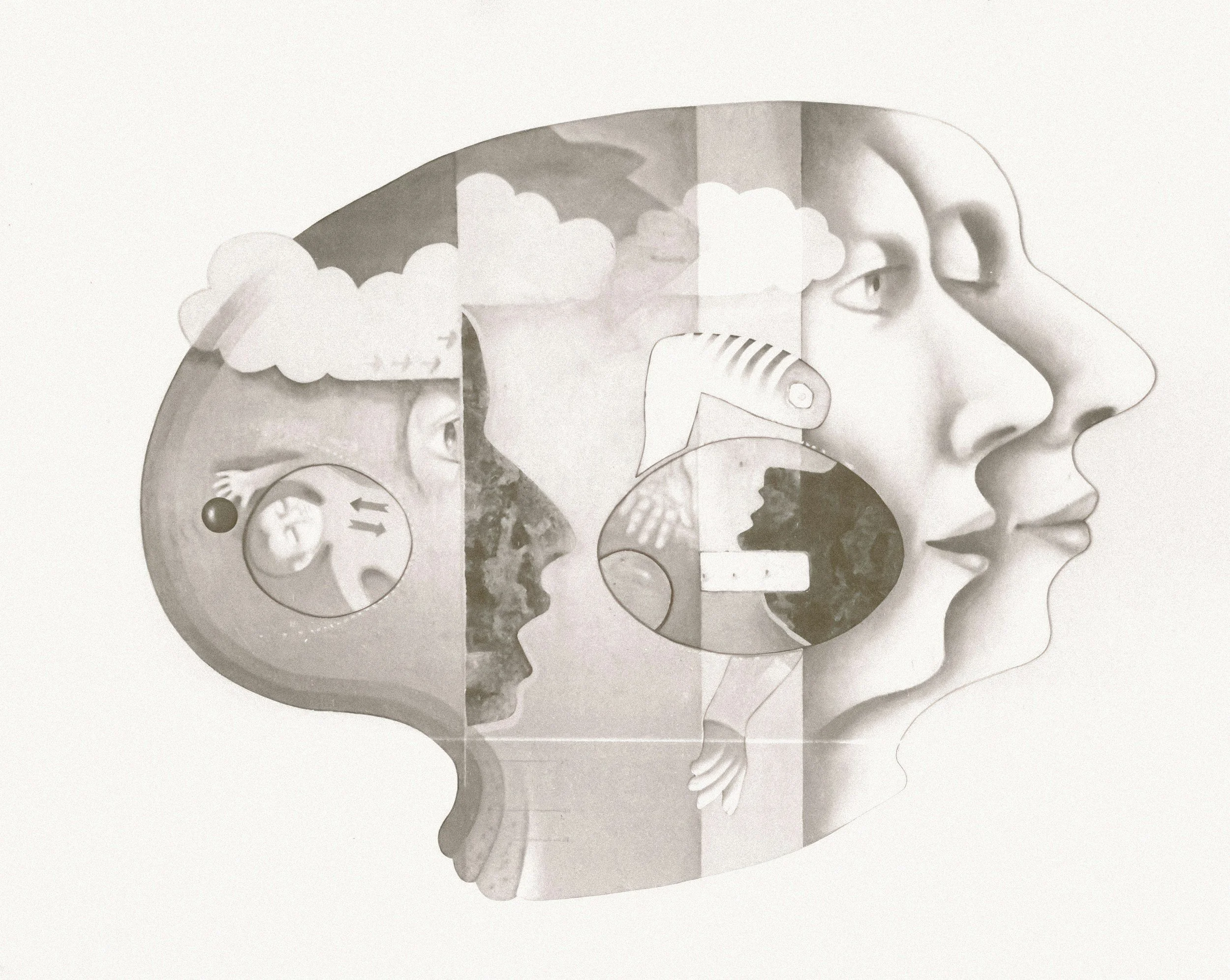
Our conscious, heroic ego often wants answers, certainty, control, and immediate resolution. But dreams ask something different of us. They ask us to listen. To wonder. To stay with an image that does not yet make sense.
Watkins (2000) has observed how the mind gets stuck in habitual patterns. She wrote about how the ego resists changing these patterns, even if they become maladaptive and painful. Dreamwork can create a more imaginal awareness—an opportunity to see ourselves and our lives from somewhere other than our familiar vantage point.
Dreams then matter because they offer an alternative to habitual ego resistance. They invite us into a relationship with what is unfamiliar, uncomfortable, irrational, and alive within us.
This is where I see a surprising connection with contemporary practices such as ketamine-assisted psychotherapy. During a ketamine experience, people can encounter altered perception, imagery, unusual associations, changes in their sense of self, and sometimes an entirely different psychological landscape. These experiences are not necessarily dreams, but they can have a dreamlike or imaginal quality.
The methods are radically different from the ancient dream practices at The Healing Sanctuaries in ancient Greece, yet the underlying human question may be surprisingly old: What might become possible when we loosen our attachment to ordinary waking consciousness?
Perhaps the dream image isn't something that needs to be explained at all.
Perhaps it is something that needs to be encountered.
And perhaps, when we become willing to encounter our dreams rather than conquer them, we discover that they have been inviting us all along—not simply to understand ourselves, but to live in reciprocity with the world, nurturing a greater sense of wholeness, connection, and purpose.

When you're ready, we'd love to hear from you:
References
Aizenstat, S. (2011). Dream tending: Awakening to the healing power of dreams. Spring Journal Books.
Bosnak, R. (1996). A little course in dreams. Shambhala.
Dunlea, J. (2019). BodyDreaming in the treatment of developmental trauma: An embodied therapeutic approach. Routledge.
Freud, S. (2010). The interpretation of dreams (J. Strachey, Trans.). Basic Books. (Original work published 1900)
Glucksman ML. The dream: a psychodynamically informative instrument. J Psychother Pract Res. 2001 Fall;10(4):223-30. PMID: 11696648; PMCID: PMC3330663.
Jung, C. G. (1974). Dreams. Princeton University Press.
King, M. L., Jr. (1963, August 28). I have a dream [Speech audio recording]. American Rhetoric. https://www.americanrhetoric.com/speeches/mlkihaveadream.htm
Neihardt, J. G. (2014). Black Elk speaks: Being the life story of a holy man of the Oglala Sioux. University of Nebraska Press.
von Franz, M.-L. (1998). Dreams: A study of the dreams of Jung, Descartes, Socrates, and other historical figures. Shambhala.
Watkins, M. (2000). Waking dreams. Spring Publications.