
Anxiety has become an increasingly common mental health challenge in today’s fast-paced indoor-based world. While traditional therapies such as counseling and medication remain essential tools, growing research shows that spending time in nature can significantly reduce stress and anxiety.
At Evolve in Nature, many clients seeking anxiety therapy in Boulder are drawn to approaches that integrate outdoor environments with evidence-based mental health care. From walking through Boulder’s beautiful trails to practicing mindfulness beside a creek, nature can create powerful conditions for emotional regulation, reflection, and mental clarity.
Nature therapy offers a simple but profound reminder: the human nervous system evolved in natural environments, and reconnecting with those environments can help restore balance when stress and anxiety feel overwhelming, especially during big challenges.
In her article Courting Your Darkness: An Antidote to Disenchantment, Megan Newton explores how true emotional wholeness often comes from courageously turning toward the parts of ourselves we tend to avoid—our pain, shadow, and “darkness.” These big realizations can often be easier to come to in the natural world.
Understanding Nature Therapy for Anxiety
Nature therapy, which can be referred to as ecotherapy, involves intentional time spent in natural environments as a way to support emotional and psychological well-being. This may include structured therapeutic sessions outdoors or simply integrating more time in nature as part of a broader mental health routine.
The underlying principle is that humans have an innate relationship with the natural world. When we step outside constant stimulation, noise, and digital overload, the body and mind often begin to regulate themselves more naturally.
Studies show that individuals who engage in nature-based practices frequently report:
Reduced anxiety symptoms
Improved mood and emotional resilience
Greater mental clarity
Lower perceived stress
For many people, nature provides a grounding environment where it becomes easier to slow down, breathe, and reconnect with the present moment.
Does Nature Therapy Actually Reduce Anxiety?
A growing body of research supports the mental health benefits of spending time in natural environments.
One widely cited study from Stanford University found that individuals who walked in natural environments showed reduced activity in the brain regions associated with rumination, the repetitive negative thinking often linked to anxiety and depression.
Nature also affects the body in measurable ways. Exposure to sunlight helps regulate vitamin D levels, which are connected to mood stability, while fresh air and gentle movement support circulation and oxygen flow to the brain.
Time in nature can also activate the parasympathetic nervous system, which is responsible for relaxation and recovery. When this system is activated, heart rate slows, breathing deepens, and the body shifts away from the chronic stress response that fuels anxiety.
For individuals seeking professional support, programs such as anxiety therapy in Boulder may incorporate outdoor environments as part of a broader therapeutic approach.
How Nature Influences the Brain and Body
Being outdoors engages multiple sensory pathways – sight, sound, smell, and touch – which bring attention back to the present moment. This sensory grounding can interrupt cycles of overthinking and calm the nervous system.
Research has shown that time spent in natural environments can lead to:
| Benefit of Nature Therapy | Evidence & Outcome |
|---|---|
| Reduced cortisol levels | Forest walks have been shown to lower stress hormone levels |
| Decreased rumination | Natural environments reduce repetitive anxious thinking |
| Enhanced parasympathetic activity | Supports relaxation and nervous system recovery |
| Improved mood and vitality | Participants report higher overall well-being |
| Better sleep quality | Nature exposure supports healthy circadian rhythms |
Over time, these effects may also support neuroplasticity, the brain’s ability to form new neural pathways and develop healthier coping mechanisms.
What Nature Therapy Feels Like
Many people find that therapy outdoors feels different from traditional office sessions.
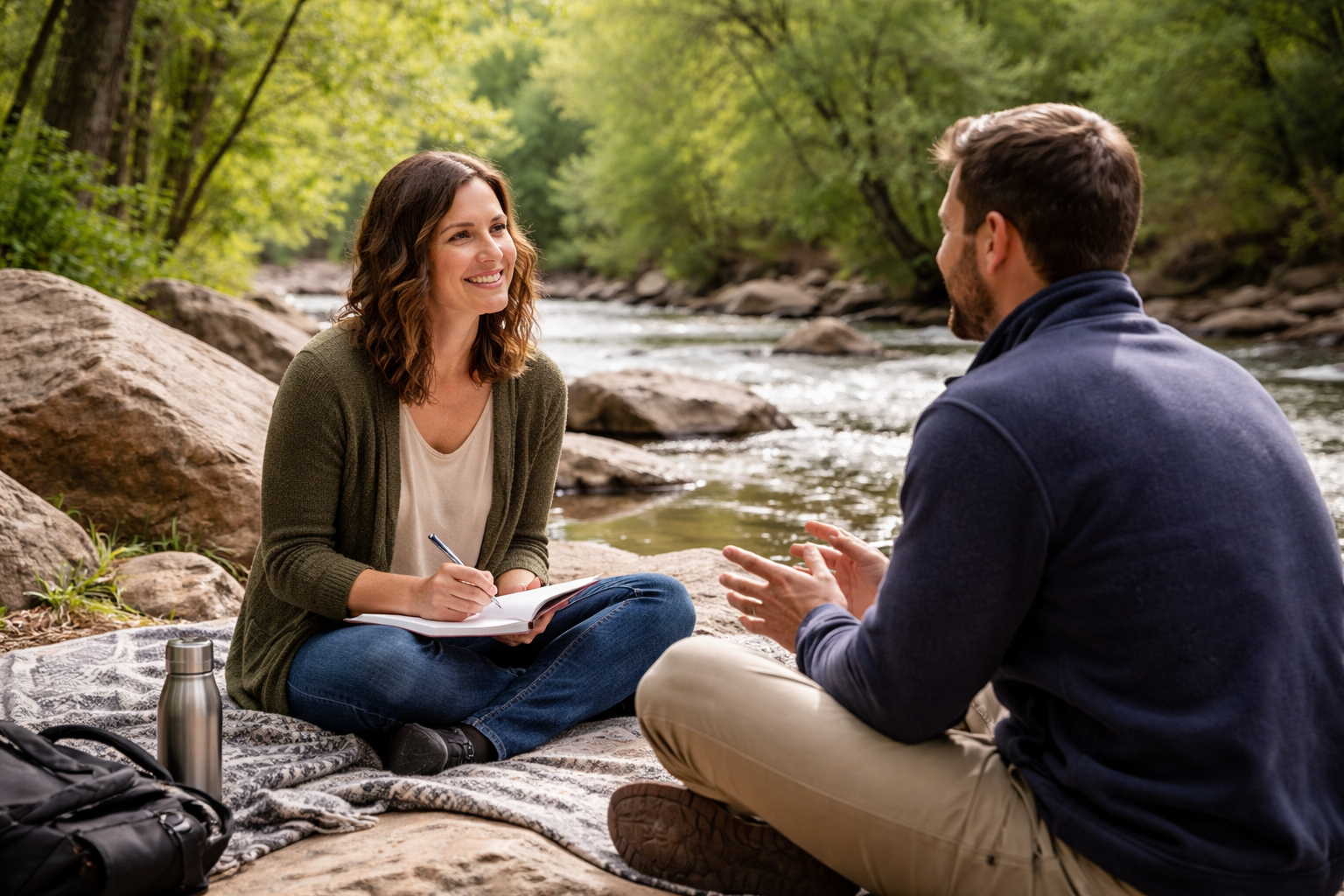
Walking along a quiet trail, sitting near water, or simply noticing the movement of wind through trees can create a sense of openness that allows conversations to unfold more naturally. The natural environment often slows the pace of thinking, making it easier to process difficult emotions.
For some individuals, being outdoors also reduces the pressure that can sometimes arise in more formal clinical settings. Nature provides a setting that feels less confined and more reflective, allowing space for insight, movement, and moments of quiet awareness.
Ecotherapy Practices That May Help Reduce Anxiety
Nature therapy doesn’t require dramatic outdoor adventures. Many simple activities can activate the calming effects of nature.
Examples include:
Walking or hiking in local parks or natural areas
Gardening or spending time with plants
Sitting quietly outdoors and observing the environment
Practicing mindfulness or breathing exercises outside
Journaling or reflecting in nature
One well-known ecotherapy practice is forest bathing, a concept originating in Japan that involves immersing oneself in the atmosphere of a forest environment. The goal is not exercise or productivity, but simply experiencing nature through the senses.
At Evolve in Nature, this spirit of mindful presence often becomes part of the therapeutic process.
Experience the Benefits of Nature Today!
You don’t need a wilderness retreat to begin experiencing the calming effects of nature. Even small, consistent moments outdoors can help regulate the nervous system.
Some simple ways to start include:
Taking a 10–15 minute walk during the morning or evening
Sitting outside for a few minutes of mindful breathing
Spending time near water, trees, or open green spaces
Taking short outdoor breaks during the workday
Journaling or reflecting outdoors instead of indoors
Over time, these small practices can create meaningful shifts in mood and overall well-being.
Combining Nature Therapy with Professional Support
While time in nature offers meaningful benefits, some individuals may benefit from combining these practices with professional mental health support.
Therapy provides a structured environment to explore the underlying causes of anxiety, develop coping strategies, and build long-term emotional resilience. In some cases, additional care such as psychiatric medication management may also be helpful.
When integrated thoughtfully, these approaches can create a more holistic path toward mental health and well-being.
Common Misconceptions About Ecotherapy
There are several misunderstandings about nature-based therapy.
“It’s only for outdoor enthusiasts.”
Nature therapy can be accessible to nearly anyone. Even brief exposure to natural environments can have calming effects.
“It replaces traditional therapy.”
Nature therapy works best as a complement to professional mental health care, not a replacement.
“Short time outdoors doesn’t matter.”
Research suggests that even short periods of time in nature can reduce stress markers in the body and improve emotional regulation.
Nature-Based Counseling in Boulder
For individuals seeking professional support, working with a therapist who integrates outdoor environments into the therapeutic process can offer a unique path toward healing.
Boulder’s natural landscapes provide an ideal setting for nature-based counseling approaches that combine traditional psychotherapy with the restorative benefits of the outdoors.
At Evolve in Nature, therapy may include opportunities to engage with natural environments while exploring anxiety, emotional patterns, and personal growth in a grounded and supportive setting.
Conclusion
Nature therapy for anxiety is a research-supported approach to calming the nervous system, improving mood, and restoring emotional balance.
At Evolve in Nature, healing often happens not only through conversation but through connection, with ourselves, with others, and with the natural world.
If you’re interested in learning more about nature-based programs or anxiety therapy in Boulder, our team is here to help guide you.
FAQ
-
Nature therapy involves spending time in natural environments to support emotional well-being, reduce anxiety, and promote nervous system regulation.
-
Ecotherapy can reduce cortisol levels, lower blood pressure, decrease rumination, and activate the parasympathetic nervous system, which supports relaxation.
-
Yes. Even brief exposure to natural environments, such as a short walk or sitting in a park can reduce stress and improve mood.
-
Yes. Some therapy practices incorporate outdoor environments into counseling sessions to support emotional processing and mindfulness.
-
Regular exposure to nature has been linked to improved mood, better sleep, lower stress levels, and stronger emotional resilience.