

Why Water Can Feel So Calming

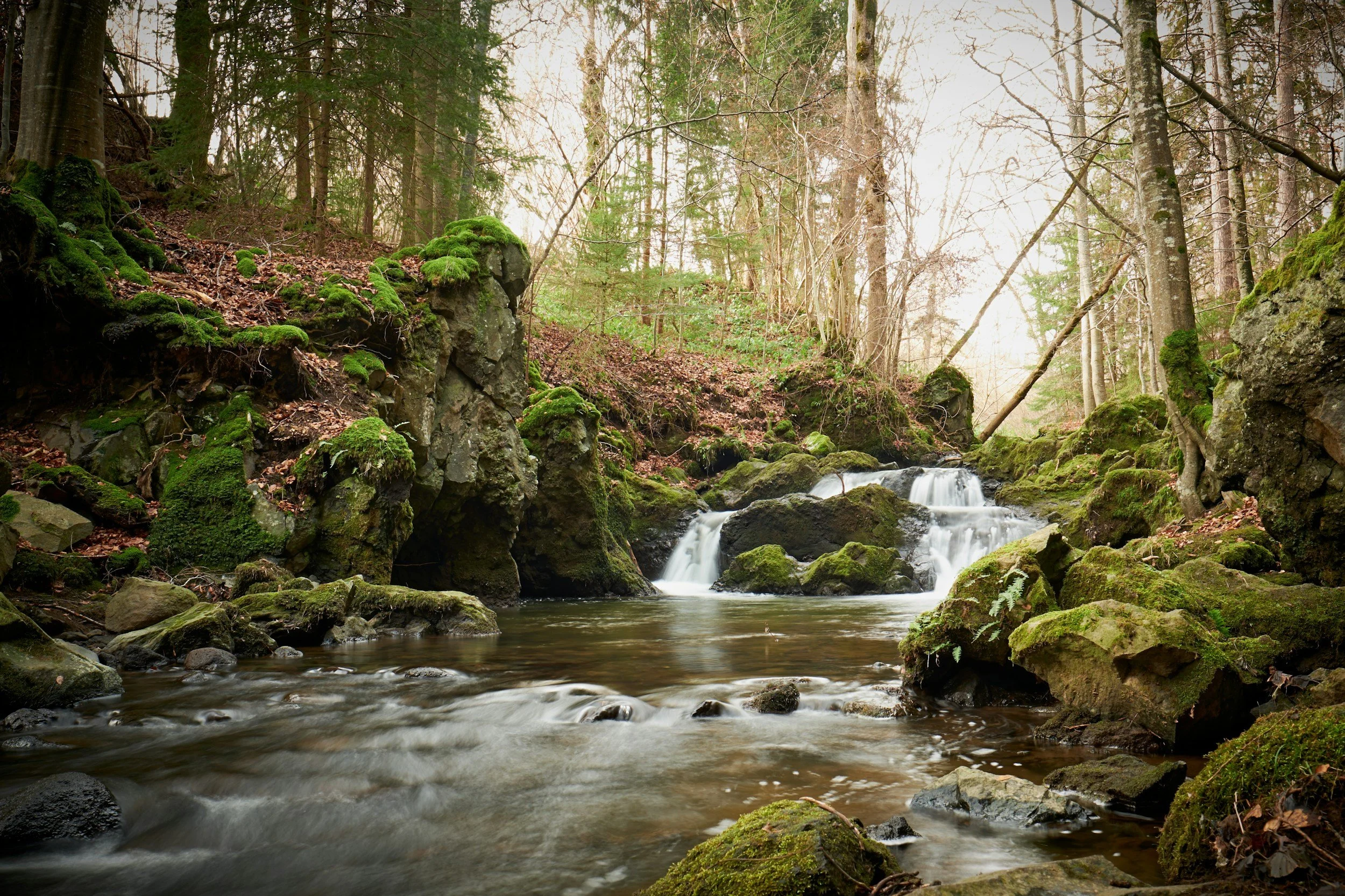
Many people are drawn to water when they need relief. They seek out rivers, lakes, rainstorms, baths, or even recordings of ocean waves. Water gives the senses something steady and changing to follow at the same time. A current continues moving, ripples spread and disappear, and rain creates a rhythm that can soften the sharp edges of a busy day. Water can also offer helpful metaphors for emotional life. Feelings rise and fall. Thoughts move through us.

Resistance can sometimes make an experience feel more rigid, while gentle attention allows it to keep moving. This does not mean we should simply “go with the flow” in every situation. Boundaries and action matter. Still, water reminds us that movement is possible and that an emotion can be present without remaining exactly as it is forever.

You do not need access to a mountain lake to explore this sense of calm. Listen to rain from a sheltered place. Notice the temperature of water while washing your hands. Sit near a fountain, take a warm shower, or watch ice slowly melt in a glass. Let the experience be sensory rather than analytical. At Evolve in Nature, we value simple practices that help people return to their bodies and the present moment, one sound, sensation, or ripple at a time.
When you're ready, we'd love to hear from you:

What Trees Teach Us About Staying Grounded While Growing

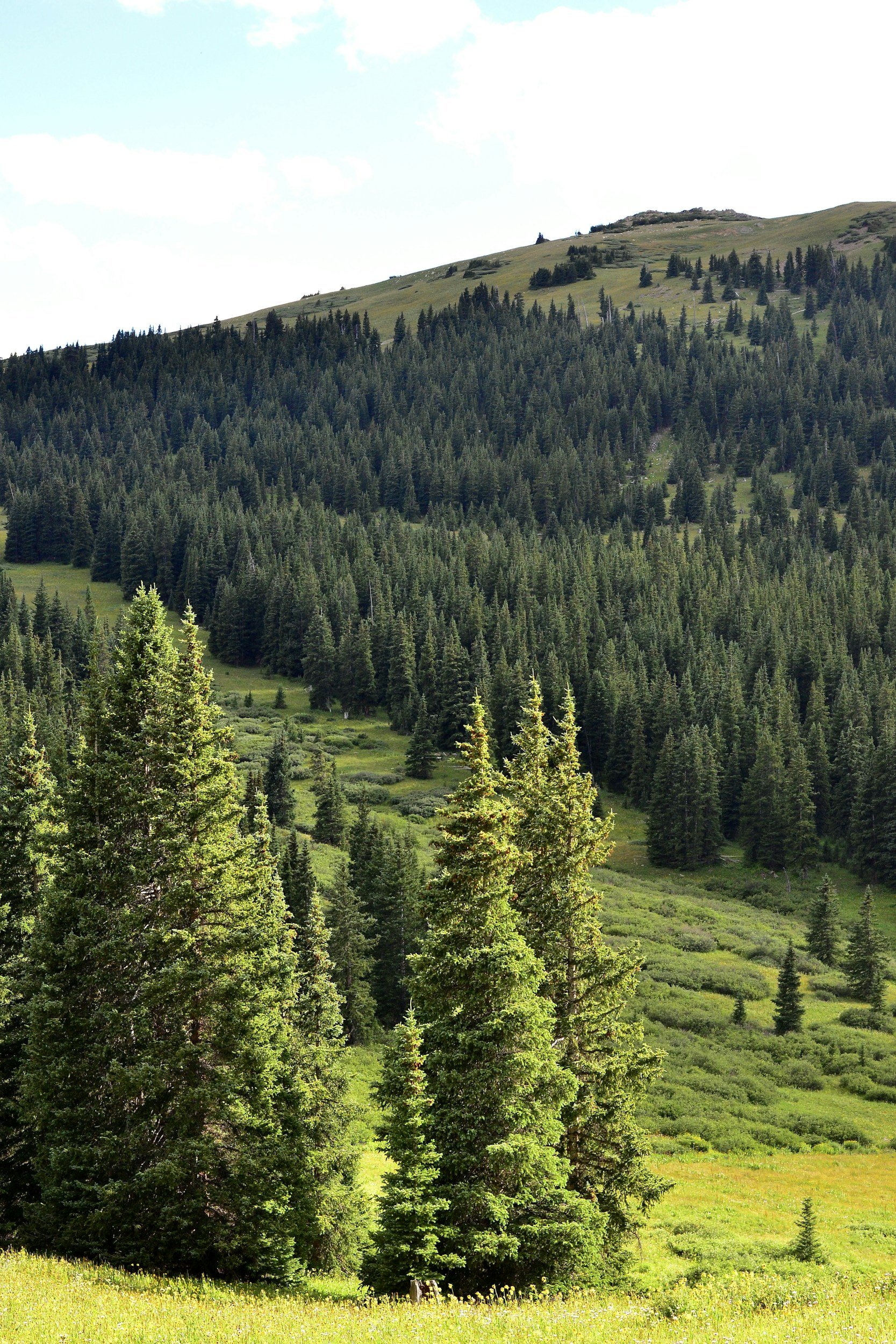
Trees offer an image of growth that includes both reaching and rooting. Their branches extend toward light while their roots move into darkness, drawing support from what cannot be seen. Human growth often asks for the same balance. We need aspirations, possibility, and movement, but we also need rest, relationships, values, and a sense of where we belong.

A grounded life is not a motionless one. Trees bend in wind, lose branches, adapt to the space around them, and continue growing in imperfect directions. Flexibility helps them remain standing. In our own lives, staying grounded may mean returning to what matters while allowing plans, roles, and expectations to change. It can mean knowing the difference between a value we want to keep and a strategy we are ready to revise.

When you feel pulled in many directions, imagine your own roots and branches. What helps you feel connected and steady? Where do you want to grow? What might need pruning so your energy can move toward what matters most? At Evolve in Nature, we view grounding not as the absence of change, but as the capacity to remain connected to yourself while change occurs. Growth can be expansive without requiring you to leave yourself behind.

When you're ready, we'd love to hear from you:

Finding Small Moments of Wonder in an Ordinary Day

Wonder is often associated with dramatic views, major trips, or once-in-a-lifetime experiences. But it also lives in ordinary places: sunlight shining through a glass of water, frost tracing a window, a bird balancing on a wire, or the first green shoot pushing through dry soil. These moments are easy to miss when our attention is occupied by schedules, worries, and screens.

Noticing wonder does not require pretending that life is easy. It is possible to feel grief and still notice a beautiful sky. We can be stressed and still laugh at a squirrel’s determination. Small moments of beauty do not erase pain; they sit beside it. Sometimes that coexistence is what makes wonder meaningful. It reminds us that difficult emotions are real without being the only thing that is real.

Try choosing one ordinary part of your day as a place to practice noticing. Look out the same window each morning. Pause before getting into the car. Step outside at dusk and observe the color of the sky. At Evolve in Nature, we see attention as a form of relationship. The more often we notice the world, the more available it becomes as a source of grounding, connection, and gentle surprise.

When you're ready, we'd love to hear from you:

What Wildflowers Can Teach Us About Growing at Our Own Pace

Wildflowers do not all bloom on the same morning. Some appear early in the season, while others wait for different temperatures, moisture, and light. A hillside can hold buds, blossoms, fading petals, and new growth all at once. There is no single timeline that makes one flower more successful than another. Each respond to its own conditions.

People need different conditions too. Healing may move quickly in one area and slowly in another. A friend may feel ready for a change that still feels overwhelming to us. Someone else’s visible progress may tempt us to judge our own, especially when we see only the part of their life they choose to share. Comparison can make growth feel like a race, even though emotional development is shaped by history, relationships, resources, safety, and timing.

When you notice yourself asking why you are not further along, consider replacing criticism with a more useful question: What conditions would support me right now? Perhaps you need encouragement, clearer boundaries, more rest, a new approach, or a safe therapeutic relationship. At Evolve in Nature, we believe growth is personal and nonlinear. You are not behind because your season looks different. Like wildflowers, you are responding to the life around you and finding your own way toward the light.

When you're ready, we'd love to hear from you:

The Quiet Healing Power of Sitting Beneath a Tree

Sitting beneath a tree can feel almost too simple to count as self-care. There is no app to open, no goal to complete, and no measurable outcome to report. Yet that simplicity may be part of its value. A tree offers shade without asking us to be productive. Its branches move, its leaves respond to the wind, and its rooted presence can invite us to slow down long enough to notice what is happening within us.

Stillness can be uncomfortable at first, especially for people who are used to staying busy or who learned that rest was unsafe. Rather than forcing yourself to relax, try becoming curious. Notice where your body meets the ground or bench. Look at the patterns in the bark. Listen for movement above you. Let the tree hold part of your attention while you gently observe your breathing, tension, or emotions without requiring them to change.

The tree does not need to symbolize anything profound, but it may. Its roots can remind us of support, its trunk of steadiness, and its branches of flexibility and reach. At Evolve in Nature, we appreciate practices that create room for both the body and the mind. Sitting beneath a tree will not solve every difficulty, but it can offer a quiet place to stop striving, reconnect with the present, and remember that simply being here is enough for this moment.

When you're ready, we'd love to hear from you:

You Don’t Have to Climb a Mountain to Benefit From Nature

In Colorado, it can sometimes seem as though connecting with nature requires hiking boots, a sunrise start, and a trail that ends at a breathtaking summit. Those experiences can be wonderful, but they are not the only way to belong outdoors. Nature is also the tree outside an apartment window, the patch of sun on a sidewalk, the herbs growing on a kitchen ledge, and the changing sky above a grocery-store parking lot.

When we make nature connection into another achievement, we can accidentally miss what it is offering. The nervous system does not grade us on mileage or elevation. It responds to moments of sensory contact: warmth on the skin, a breeze, birdsong, the texture of bark, or the steady movement of clouds. These small encounters can help bring attention back to the present, especially on days when energy, mobility, time, or access is limited.

Consider creating a version of nature connection that actually fits your life. Sit near an open window while drinking coffee. Take lunch outside. Keep a stone, pinecone, or photograph from a meaningful place where you can see it. Watch the light shift across a room. At Evolve in Nature, we believe the natural world is not a destination reserved for the adventurous. It is a relationship available in many forms, including the small and ordinary ones that meet us exactly where we are.

When you're ready, we'd love to hear from you:

Why a Walk Outside Can Feel Like a Reset Button

There are days when our thoughts seem to circle the same problem again and again. We may sit at a desk, scroll through our phones, or move from one responsibility to the next while feeling increasingly tense and disconnected. Stepping outside can interrupt that pattern. A walk changes what we see, hear, and feel. The air may be cooler than the room we left, our breathing may begin to shift, and our attention may move from an internal loop toward the world around us.

The value of a walk is not that it makes every problem disappear. Instead, it can create a little more space around what we are carrying. Movement gives restless energy somewhere to go. Natural sounds can soften the constant demand for our attention. Looking farther into the distance can feel different from staring at a screen or the same four walls. Even a short walk can help us return to ourselves with a slightly wider perspective.

A reset walk does not need to be fast, scenic, or impressive. It can be one block around your neighborhood, a slow loop through a park, or a few minutes outside between meetings. You might notice three colors, listen for the farthest sound you can hear, or simply feel your feet meeting the ground. At Evolve in Nature, we often view movement and the outdoors as companions to emotional wellness: not another task to perform perfectly, but a simple invitation to pause, notice, and begin again.

When you're ready, we'd love to hear from you:

Window of Tolerance: Why You Feel Fine Then Overwhelmed

Most people have had the experience of feeling completely fine and then seemingly out of nowhere, finding themselves flooded, reactive, or shut down. A tone of voice, a small disappointment, an unexpected moment of conflict. Something that seems minor from the outside but lands hard on the inside. If this sounds familiar, it's worth knowing: this isn't a character flaw or an overreaction. It's often a nervous system that has been shaped by experience.

People Pleasing and Trauma: Why It's So Hard to Say No

Most people know on some level when they want to say no. They feel it, a flicker of reluctance, a small contraction somewhere in the chest or stomach. But then they say yes anyway. For some people, this happens occasionally. For others, it's so automatic and so constant that it starts to feel like personality. If you find yourself agreeing to things you don't want, avoiding conflict at almost any cost, putting everyone else's needs ahead of your own, it's worth asking "where did I learn that I couldn't say no?"

Reclaiming Power: Understanding Intimate Partner Violence Through Language, Awareness, and the Duluth Model

Reclaiming Power: Understanding Intimate Partner Violence Through Language, Awareness, and the Duluth Model

To truly support healing, we must move beyond fragmented conversations and instead build a deeper understanding of how language, patterns of control, and relational dynamics shape the lived experiences of those affected by IPV. When we do this, we shift from simply identifying harm to actively fostering empowerment and healing.

Trauma vs Stress Symptoms Explained – Get Help Today

Not all psychological strain feels the same, and it isn't. Some stress is the kind that eases after a deadline passes or a difficult conversation ends. Another strain runs deeper, staying with you long after the situation has resolved, shaping how you feel, how you connect, and how safe the world seems. Understanding the difference between trauma and stress isn't about labeling yourself, but knowing what you're actually dealing with so you can get the right kind of support.

Anxiety Burnout Signs: Know the Warning Signals Today

Stress has a way of building quietly. Work demands, family responsibilities, financial pressures, and the constant pull of digital life can pile up gradually, until one day, feeling overwhelmed stops feeling temporary. For many people, what starts as anxiety slowly becomes something heavier: burnout. Not the tiredness that fades after a good weekend, but a deeper depletion that rest alone doesn't seem to touch.

Understanding Your Nervous System: A Simple Guide to Regulation

Understanding Your Nervous System: A Simple Guide to Regulation

You may have noticed that certain moments knock you sideways in ways that feel disproportionate. A minor comment from a coworker leaves you seething for hours, or a moment of stillness suddenly fills with dread for no clear reason. You might feel perpetually "on," unable to unwind even when life looks fine on the outside. Or you might find yourself going numb, disconnected from people and experiences that used to feel meaningful…

Conflict Without Damage: A Therapist's Guide to Healthy Arguing

Conflict is an inevitable part of human relationships. Whether between partners, family members, coworkers, or friends, disagreements naturally arise when individuals have different needs, values, or expectations. The problem is not conflict itself but how people handle it. Learning healthy conflict tips allows individuals to disagree without harming emotional safety or long-term connection…

Understanding the Dual Process Model of Grief

Understanding the Dual Process Model of Grief

Grief is often described as a journey, but for many people it does not feel like a clear path with defined stages. Some days may be filled with sadness, longing, and memories of the person we have lost, while other days involve focusing on work, family, and everyday responsibilities. This emotional back-and-forth can feel confusing, but it is actually a very sacred part of the grieving process. The Dual Process Model of Grief, developed by grief researchers Margaret Stroebe and Henk Schut, provides a framework that…

Sunlight and Mental Health: Why a Little Sunshine Can Make a Big Difference In Your Mood

Sunlight and Mental Health: Why a Little Sunshine Can Make a Big Difference In Your Mood

In a place like Boulder, Colorado, the value of sunlight can be something we take for granted. It quietly fills our days, marks the passage of seasons, and warms our skin even on the coldest winter days, yet its impact on our mental health runs far deeper than many realize. Beyond simply “brightening your day,” sunlight plays a powerful biological and emotional role in how we feel, think, sleep, and connect with others…

How Trauma Shows Up in the Body: Signs You Shouldn’t Ignore

How Trauma Shows Up in the Body: Signs You Shouldn’t Ignore

Trauma is often thought of as something that lives in memory of flashbacks, intrusive thoughts, or painful emotions. But for many people, trauma shows up first and most persistently in the body. Chronic pain, fatigue, anxiety, digestive problems, or emotional numbness may all be signs of trauma in the body, even when the original experience feels distant or unclear.